



Key takeaways:
- It’s a good time to sell your house if you price correctly and are open to negotiation.
- Nationwide, there are 63% more home sellers than buyers in the market, giving buyers a strong advantage.
- Mortgage rates remain elevated and volatile as tensions in the Middle East push inflation and economic concerns higher.
- Selling now could help you avoid potential price swings if the economy moves toward recession or inflation; waiting until 2027 may not pay off.
If you’re thinking about selling your home this fall, you’re not alone. The housing market has strongly favored buyers all year, and with more homeowners getting antsy to move, the needle continues to move in buyers’ direction. But as high housing costs continue to put a lid on demand, it’s natural to wonder when it will finally make sense to sell.
The typical monthly housing payment has topped $2,600, while inflation has pushed up the prices of many everyday goods. These costs have scared many buyers, leading to a very slow housing market with more supply than demand. AI fears and the conflict in the Middle East have added to the struggles, pushing up mortgage rates, reigniting inflation worries, and fanning bond market anxiety.
So, what does this all mean for home sellers? Let’s dive into the data to help you decide if you should sell your house now or wait until 2027.
>> Read: How to Sell Your House in 2026
From Redfin’s Chief Economist
“Home sellers should prepare for a strong buyer’s market. Elevated inventory has given buyers more options, but record costs have made them wary. Volatile mortgage rates and an unstable economy are adding a layer of uncertainty as well, making it harder for buyers to plan and act with confidence. Affordability has only marginally improved over the last year, so those willing to brave today’s market are prepared to lead negotiations and pay a fair price. The near future is looking difficult for both buyers and sellers, but the right deal is still out there.” – Daryl Fairweather, Redfin Chief Economist.
What sellers need to know about the housing market
Here are some market trends to keep an eye on before finding an agent and listing your home for sale. We’ll cover housing supply, demand, mortgage rates, and inflation.
Buyers are in charge, mostly
Nationwide, there are nearly 600,000 more home sellers than buyers. This gap was shrinking earlier in the year, but now that buyers are pressing pause, it’s growing rapidly.
Because of the discrepancy, most home sellers need to be flexible on pricing and willing to offer concessions to stay competitive. Many are doing so, with asking prices recently dropping to their lowest level in a year. But some would-be buyers and sellers are instead backing out of deals, choosing not to list, or even delisting their homes altogether. For buyers with the budget, now could be a great time to score a deal.
That said, trends vary widely across the country. In the Midwest and Northeast, there aren’t enough listings to meet demand, so home sellers in cities like Rochester and Milwaukee may see bidding wars and quick sales. On the flip side, most Sun Belt cities favor buyers due to a prolonged surge in housing construction.
The economy is volatile
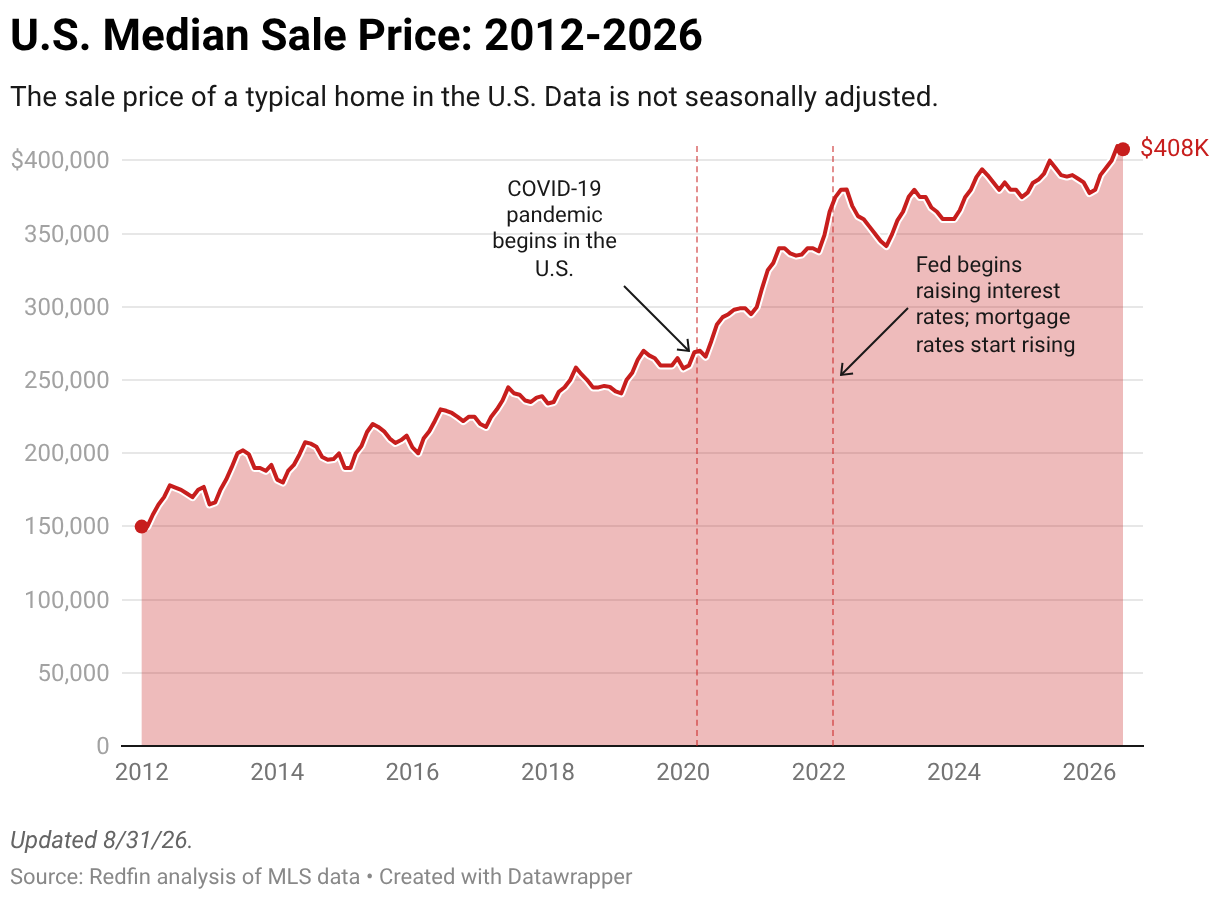
The U.S. median home sale price is sitting at $393,000 as of September 2026 – up just 1.3% from 2025. Slower price growth has actually allowed wages to gain ground over the last year or so, helping housing become slightly more affordable.
However, economists and investors are concerned about inflation, which has been rising recently due to the conflict in the Middle East, oil prices, tariffs, AI fears, and a surprisingly strong economy. These factors have helped keep mortgage rates above 7% since September, with more volatility expected in the future.
“Mortgage rates are reacting to the conflict in the Middle East, as rising energy costs and concerns over inflation and a bond market selloff put pressure on the economy,” said Chen Zhao, Head of Economics Research at Redfin. “Prolonged tensions have kept investors and consumers on edge, waiting to react to changes in oil prices and fresh economic data. Broadly speaking, unless homebuilding skyrockets or the country falls into a severe recession, buyer activity and housing affordability are unlikely to improve substantially in the near future. AI is a wildcard, as well.”
In these uncertain times, it’s essential to talk with your agent to decide if now is a good time to sell.
>> Read: How to Buy, Sell or Rent a Home Amid Economic Uncertainty
When is it a good time to sell your house?
Spring is the best time to sell, when buyers are most likely to be active. A recent Redfin report found that sellers close the fastest and for the most money in late April, while buyers have the most leverage in late summer.
However, market trends and personal considerations matter the most. In today’s market, most sellers should prepare for lower demand, plan ahead for their next home, and be realistic about pricing.
Here are some general rules for sellers to follow to decide if it’s a good time to sell.
|
If housing supply is low
|
Fewer homes on the market can push prices up and lead to faster sales. That’s the case in a few metros today, especially in the Midwest and Northeast, where demand outpaces supply.
|
|
If mortgage rates drop
|
Falling mortgage rates can spark a surge in buyer demand. More buyers in the market often means higher prices, stronger offers, and possible bidding wars – good news for sellers. As rates drop, sellers should keep an eye out on local market trends.
|
|
If you need to sell
|
Sometimes, life necessitates that you sell. Maybe your family is growing, you need to relocate for work, or want to be closer to family. In these cases, it may not matter if it’s an objectively “good” time to sell. Work with your agent to find the best strategy for you.
|
>> Read: When Is the Best Time to Sell a House?
When is it a bad time to sell your house?
You may have no choice but to sell your house – but when these trends are at play, you’re less likely to sell quickly or above market value.
|
If mortgage rates are high
|
Higher mortgage rates effectively shrink buyers’ budgets, meaning they get less house for the same amount of money. This often means fewer, lower offers. If you can’t command the price you want, it may be worth waiting to sell.
|
|
If you’ve recently refinanced
|
Selling soon after refinancing could wipe out any savings you gained from a lower rate, especially once you factor in closing costs and fees. Many sellers today are “locked in” to a pre-pandemic rate and see no reason to give it up – though this share is dropping.
|
|
If your home needs work
|
A home that needs some love can be harder to sell and may attract lower offers. If you have major repairs on your to-do list, consider tackling them before listing.
|
>> Read: How to Sell Your House Fast and for More
How long does it take to sell a house right now?
The housing market is stuck in a rut, with buyers and sellers struggling through a difficult economy. This slowdown continues to show up in the data: The typical home currently takes 51 days to sell, up from less than a month in 2022. Sellers need to price fairly, remain attuned to the current market, and plan for a longer timeline than they had during the pandemic.
While it takes much longer to sell a home today compared to the early 2020s, it’s actually much faster than the 60-100-day pace typical of the 2010s.
So, should you sell your house now?
If you are financially ready and have a great agent, now may be a good time to sell a house. It’s a buyer’s market in most parts of the country, and that’s unlikely to shift significantly anytime soon. However, with a solid gameplan, you can still attract buyers and sell with confidence. Serious sellers should connect with an agent, price competitively, and stay open to negotiations.
There are always good reasons to sell your house: Maybe you’re relocating, downsizing, hoping to cash in on your home’s equity, or simply need to move. The right decision depends on your personal circumstances. It’s unlikely that waiting to sell until 2027 will make the choice easier. In today’s unpredictable housing market, having a solid strategy matters more than trying to time your sale perfectly.